Case Study
Booking a ride, without the friction.
Taxi OLE
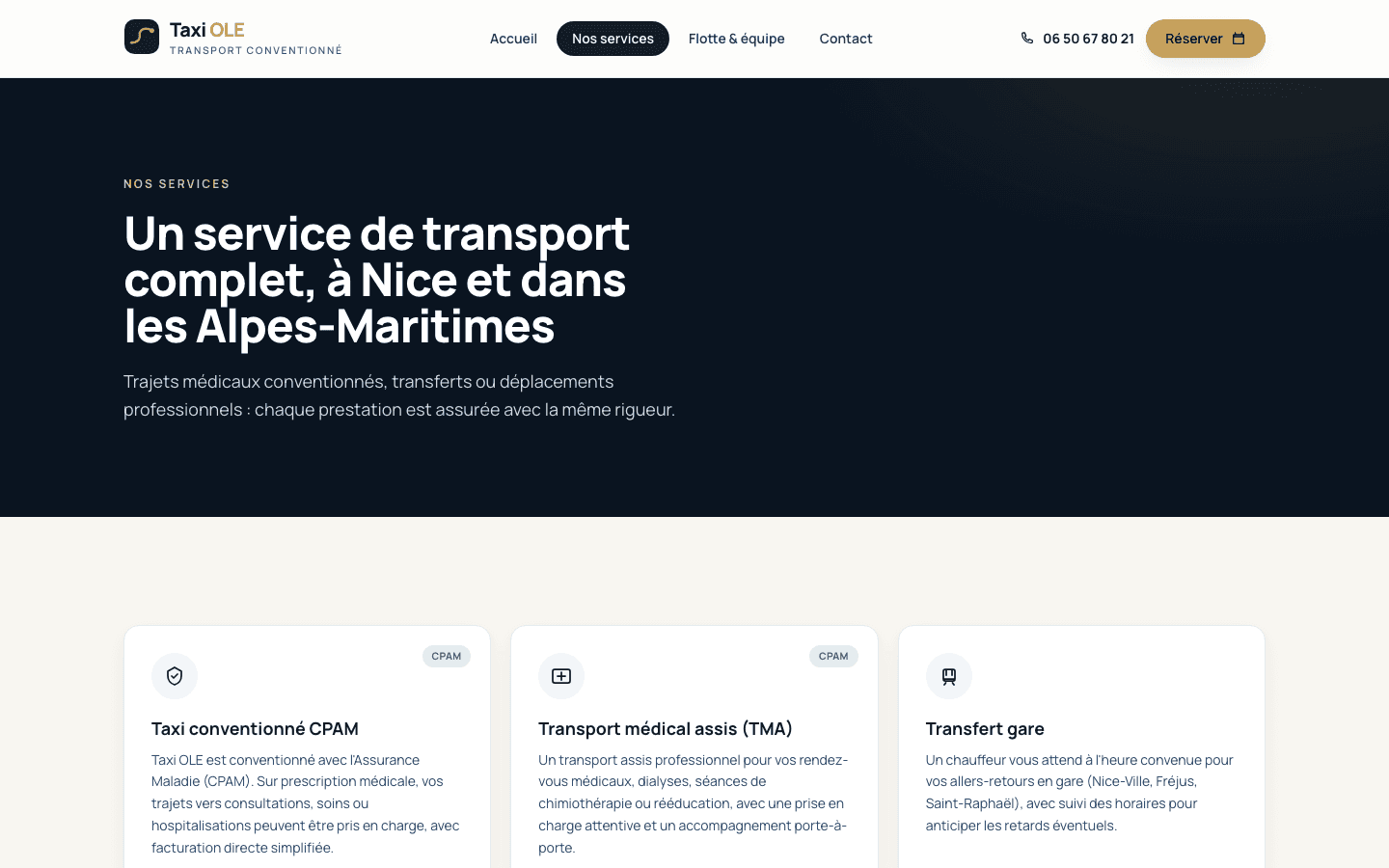
A clean, trustworthy website for a CPAM-approved taxi and medical transport service based in Nice, covering the Alpes-Maritimes and into the Var, with dedicated medical transport, transfers, fleet, and FAQ pages replacing a single, undifferentiated booking page.
Context
Context
Oualid runs Taxi OLE, a CPAM-approved taxi and medical transport service based in Nice with four years in business, serving the Alpes-Maritimes and stretching into the Var, including Fréjus, Saint-Raphaël, and Roquebrune-sur-Argens. CPAM accreditation, the French national health insurance system's approval for reimbursed medical transport, sits at the center of the business: it's what makes the service usable for patients whose transport is covered by their health insurance, on presentation of a prescription médicale de transport (PMT).
A meaningful share of the business isn't the patient booking their own ride. It's a family member arranging transport for a parent, a spouse, or a child, often for a medical appointment, a hospital stay, or a dialysis session that can't be missed. That reality shapes almost every decision on the site: it has to work for someone booking calmly in advance and for someone booking anxiously on someone else's behalf.
The Problem
The Problem
Most visitors arriving at a taxi and medical transport site have one job in mind, and they usually need it done quickly: confirm the ride will actually be covered, then book it. The previous version of the site made both steps harder than they needed to be. CPAM eligibility, PMT requirements, and third-party payment weren't explained clearly enough for a visitor to self-serve that answer, which meant more calls asking questions the site should have already answered.
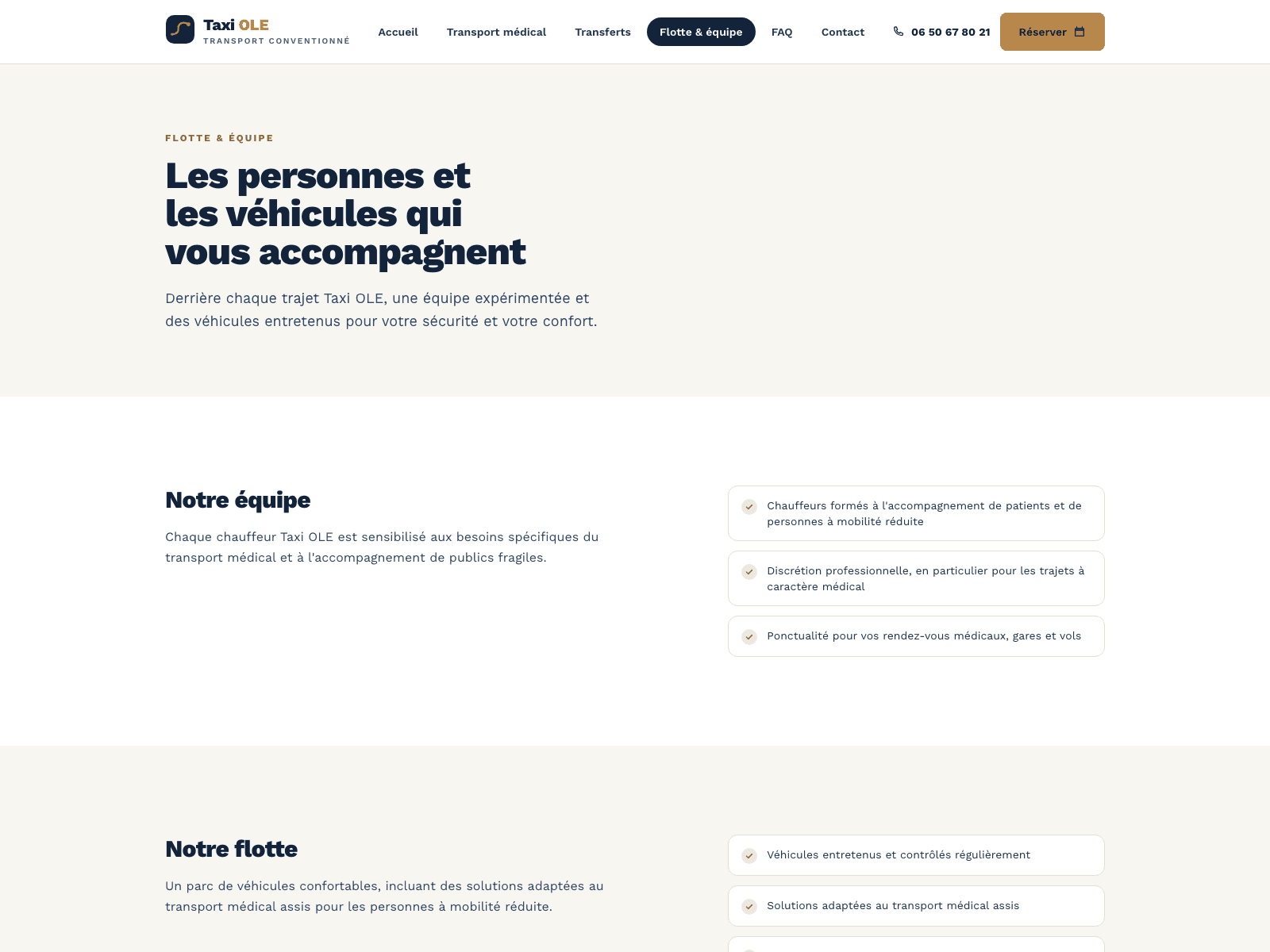
The service itself is also broader than a single ride type: standard taxi trips, seated medical transport (transport médical assis) for patients with reduced mobility, airport and train station transfers, and longer-distance trips on request. None of that variety was communicated clearly, so visitors searching for one specific need, an airport transfer or a dialysis appointment, had no fast way to confirm Taxi OLE actually covered it.
Strategy
Strategy
The strategy split around the two real audiences booking a ride: patients and families dealing with CPAM-covered medical transport, and everyone else booking a standard transfer, airport run, or longer trip. Each needed its own clear answer, not a single undifferentiated page trying to speak to both.
For the medical side, the priority was removing every point of friction around eligibility: PMT acceptance, Carte Vitale and tiers payant on eligibility, and what to expect from a chauffeur trained in patient accompaniment, stated plainly instead of implied. For everything else, the site needed to clearly cover the actual service area and the specific transfer types on offer, including flight and train tracking for pickups. A dedicated FAQ, organized by topic rather than one long list, was treated as core infrastructure, not an afterthought, since it answers exactly the questions that otherwise turn into phone calls or lost visitors.
Wireframes
Wireframes
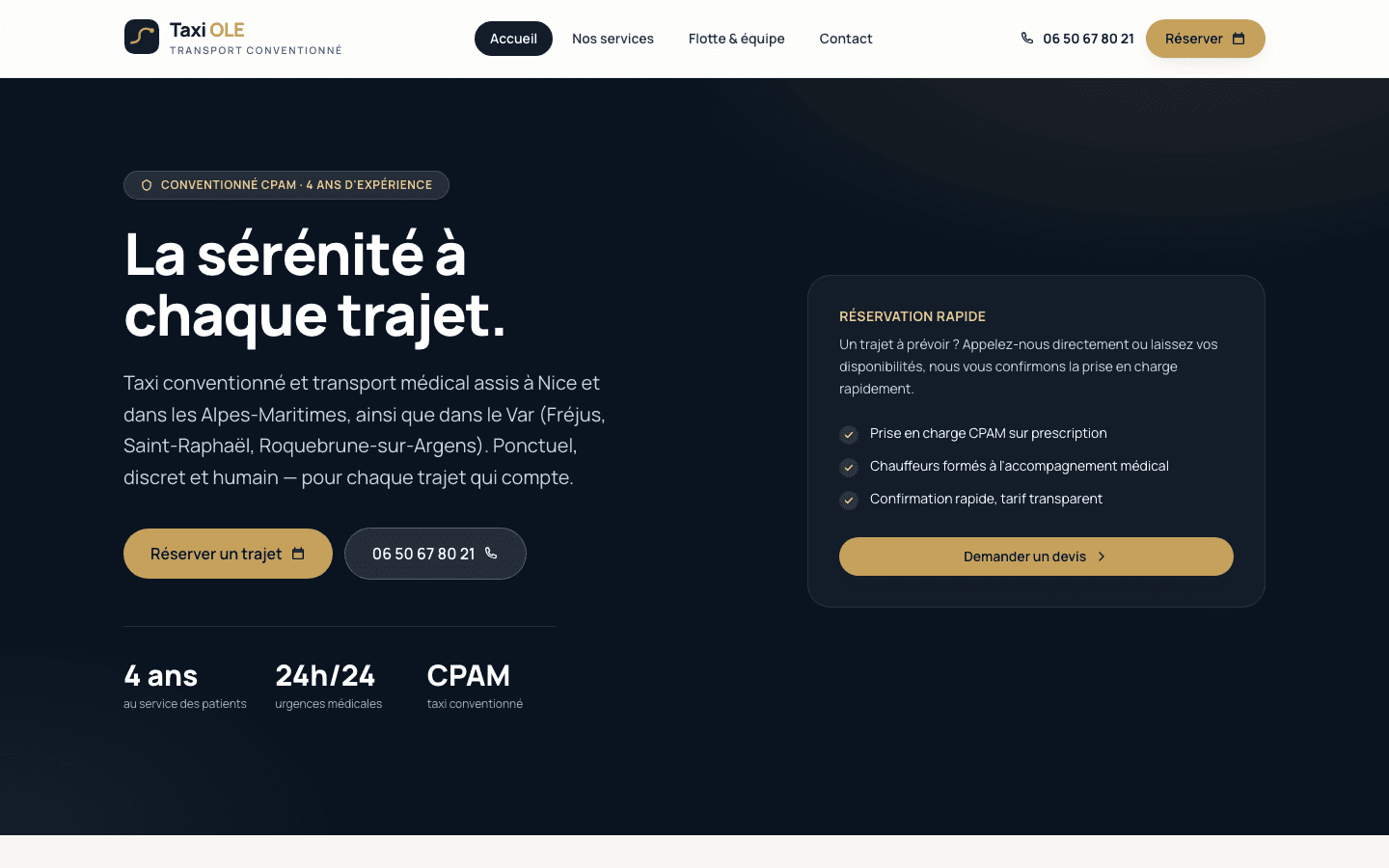
Wireframes started from the mobile view, since that's genuinely how most visitors arrive: searching on their phone, often in a hurry, sometimes on behalf of a family member rather than themselves. The homepage was structured so the call button, booking action, and CPAM and experience trust markers are all visible without scrolling, immediately followed by a clear split between medical transport and other trip types.
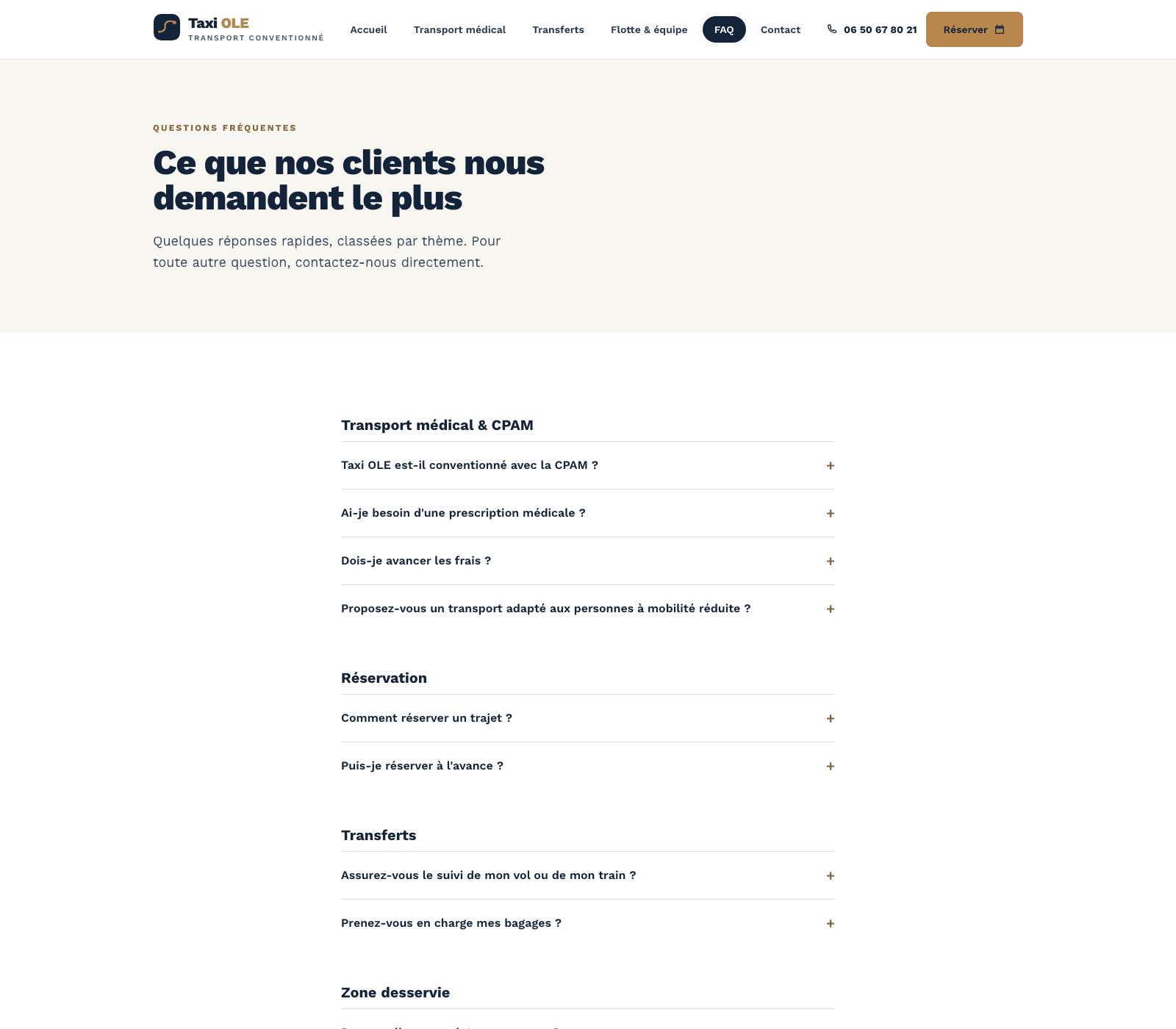
A dedicated transport médical page was planned to carry the eligibility detail in full (PMT, Carte Vitale, tiers payant, seated transport for reduced mobility) without cluttering the homepage, alongside a separate transfers page for airport and train station trips. A fleet and team page was wireframed specifically to make the human side of the service tangible: who's actually driving, and what they're trained for. The FAQ was structured into topic clusters, medical transport and CPAM, booking, transfers, and service area, so a visitor scans straight to their actual question.
Branding
Branding
The visual identity leans into trust and clarity rather than trying to look flashy or premium for its own sake, since the audience for a medical transport service is judging reliability, not style. A dark navy base with a warm gold accent signals a professional, established operator rather than an informal, ad-hoc taxi service, while staying warm enough not to feel corporate for a service that's often booked at a stressful moment.
CPAM accreditation and years of experience are treated visually as trust badges throughout the site, placed consistently near the top of every page, rather than as a line of text buried in a paragraph a worried visitor has no patience to read in full.
Development
Development
The site was built as a fast, lightweight site optimized specifically for mobile performance, since a visitor booking urgently on a slow connection is exactly the person this business can least afford to lose to a loading spinner. The booking path was kept to as few taps as possible from landing to actually reaching Oualid, with the phone number and a booking request repeated at every natural decision point.
Content was restructured into dedicated pages, transport médical, transferts, flotte et équipe, FAQ, and contact, each with its own clear purpose, rather than compressed onto one page. The FAQ was built with real, topic-clustered questions instead of a generic list, and the whole site was structured for local search across Nice and the surrounding Alpes-Maritimes and Var communes it actually serves.
Results
Results
Confirming CPAM eligibility and getting a ride booked are now the obvious, immediate actions for anyone landing on the site, on any device, with accreditation and years of experience visible from the first screen. The dedicated transport médical and transferts pages mean a visitor can self-serve the specific answer they need, PMT requirements, seated transport for reduced mobility, flight and train tracking, without calling first just to ask.
The FAQ now answers the exact questions that used to generate phone calls, organized by the same real categories visitors actually search for: medical transport and CPAM, booking, transfers, and service area. For a business where a meaningful share of visitors are booking anxiously on behalf of someone else, that combination of clarity and reassurance is what turns a visit into a completed booking rather than a hesitant phone call that never happens.
FAQ
FAQ
They're genuinely different bookings with different questions attached. A patient confirming CPAM coverage and PMT requirements needs different information than someone booking an airport transfer, so each now has its own dedicated page instead of being folded into one general services list.
Most of the FAQ answers questions that used to become phone calls: is a prescription required, do I need to pay upfront, do you track flight delays. Answering them on the site directly reduces friction for visitors who'd rather self-serve than call.
Nice, Fréjus, Saint-Raphaël, and Roquebrune-sur-Argens are named explicitly rather than left implicit, both so visitors in those areas know they're covered and so the site surfaces in local search for each of them.
A priority. For a service that often transports someone vulnerable, a family member arranging a parent's ride wants to know who's actually driving and what they're trained for, not just that a taxi will show up.

Have a project like this in mind?
Tell us about your project and timeline. We reply within one business day.