Case Study
Real photography and zero inputs, until now.
Fartuck
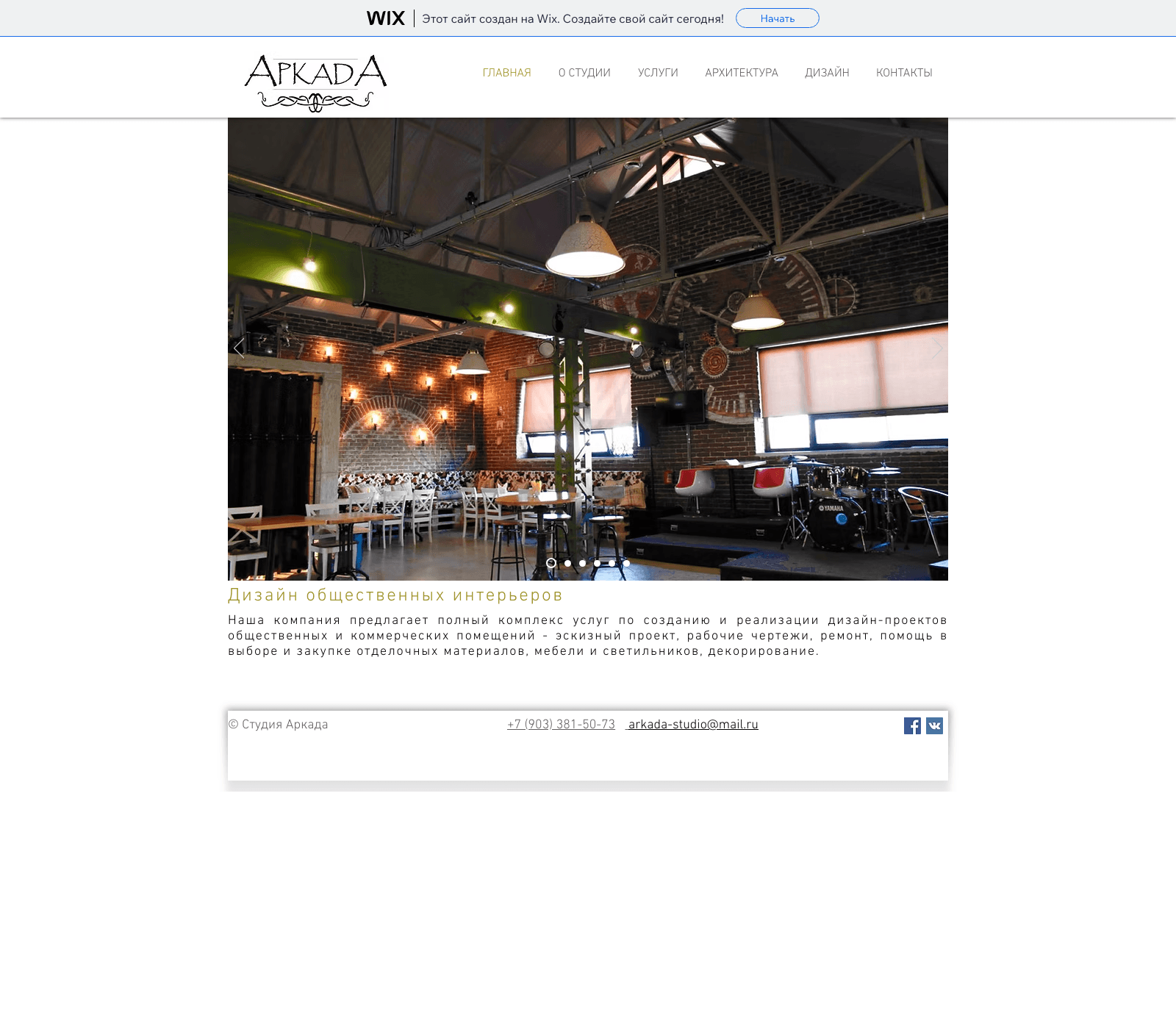
A ground-up rebuild for a Moscow interior design studio, replacing a single-page Tilda site where five 'Order' buttons led nowhere with a structured, multi-page site built around six real projects.
Context
Context
Fartuck is an interior design studio in Moscow founded in 2012 by Мария Граб and Полина Смелова, who met at the Moscow Art-Industrial Institute and started the studio the year they graduated. Over more than a decade, the pair have built a real six-project portfolio spanning private apartments and a large commercial space, priced across four published tiers from planning-only packages to full author's supervision.
Because Мария and Полина develop every concept personally, they can only take on a limited number of projects at a time, which makes matching visitor intent to studio fit the site's first job, before a call ever happens rather than after. A prospective client needs to see real work, understand what a project actually costs, and be able to start a conversation without friction, all before deciding whether Fartuck is the right fit.
The Problem
The Problem
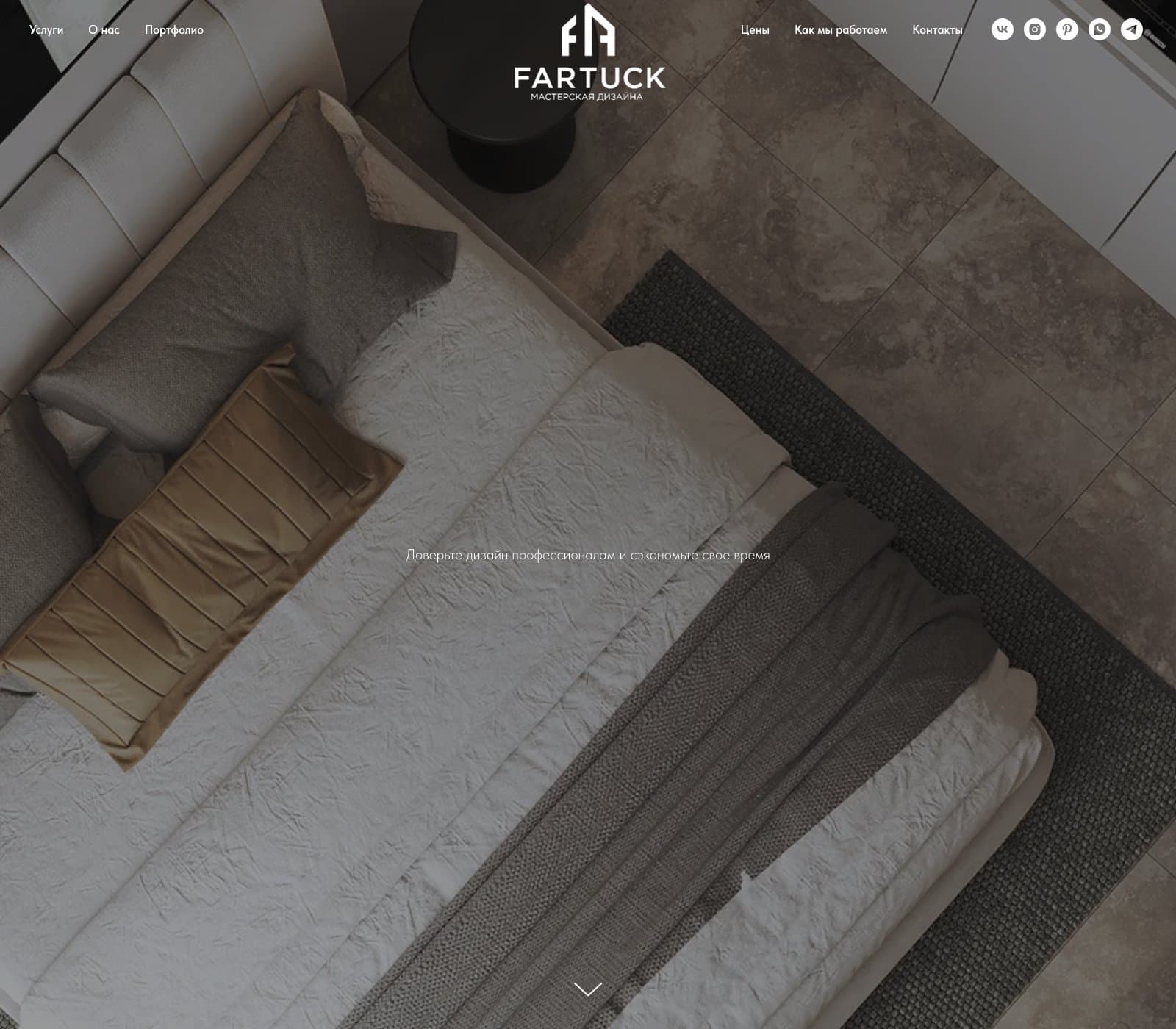
A full technical audit of fartuck.com, built on Tilda, found zero form elements and zero input fields anywhere on the site, including on the five separate 'Заказать проект' (Order a project) buttons spread across the homepage. Every one of them was a plain link to the '#contacts' anchor at the bottom of the same page, not a form, not a phone link, not an email link. A visitor ready to start a project had no way to actually start one from the site.
The six real projects in the portfolio, each with a genuine name, location, year, and size, were reduced to a small thumbnail grid with no individual project pages, so none of them could tell the fuller story behind the brief or the studio's actual decisions. And because the entire site lived on one long scrolling page, there was no dedicated destination for projects, services, or the studio itself that could be found directly through search or shared as its own link.
Strategy
Strategy
The strategy started with the most basic gap: give a ready visitor an actual way to reach the studio. That meant a real contact page and a working enquiry path to replace five buttons that led nowhere, treated as a prerequisite before any visual or structural work began, the same way it would be for any business with zero functioning lead capture.
From there, the homepage needed to do less at once: state what Fartuck does and for whom, then hand off quickly to dedicated destinations for projects, services, and the studio, each able to stand on its own and be found directly through search. The six real projects moved from an anonymous thumbnail grid toward individually captioned entries, since a client evaluating a project this size deserves the location, size, and story behind each one, not just a photo.
Wireframes
Wireframes
Wireframes opened with a homepage built to route a visitor in seconds: a clear statement of what the studio does, immediate proof through a couple of flagship projects, and a direct path to either the full project list or a consultation request, rather than one undifferentiated scroll of sections.
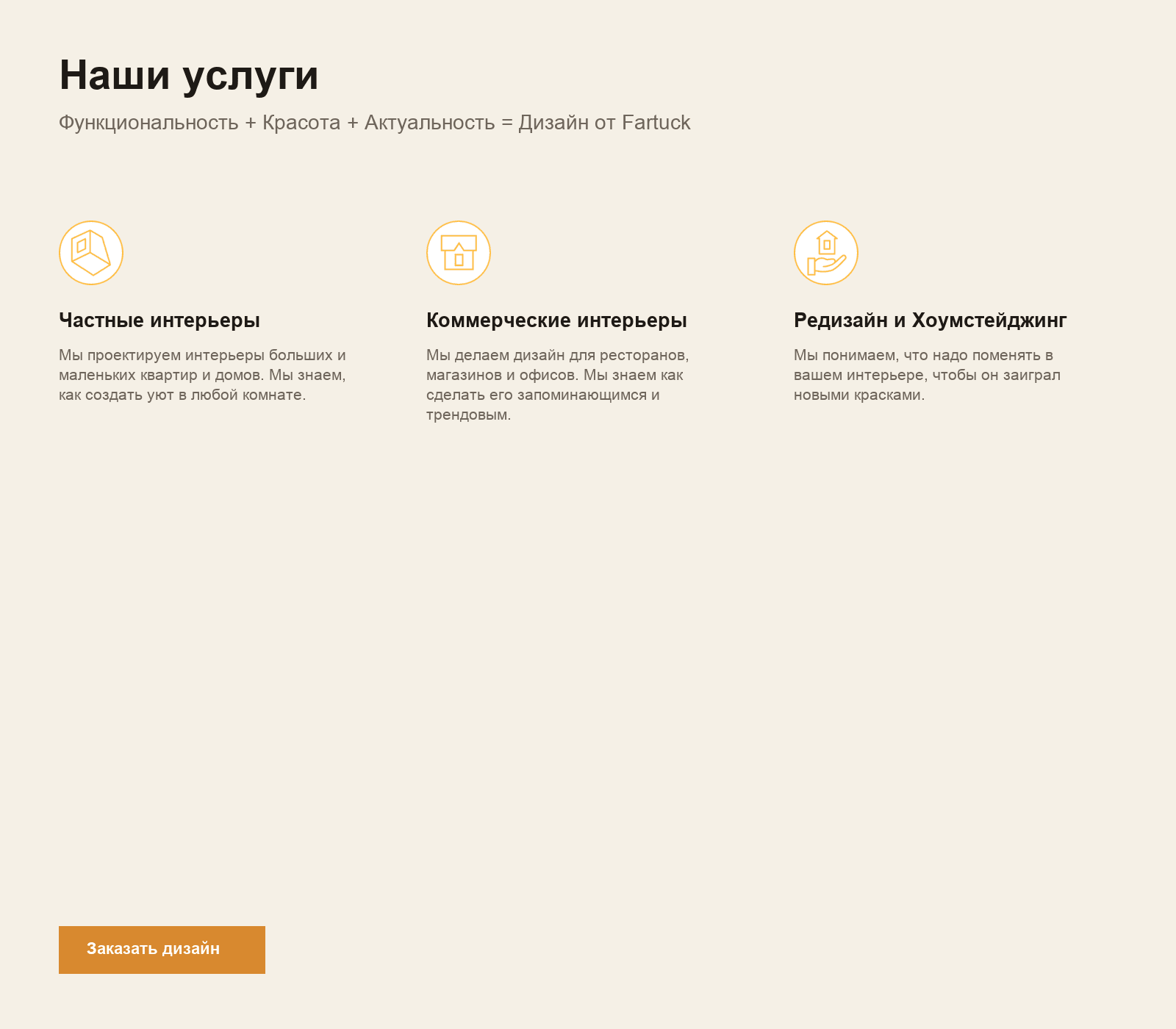
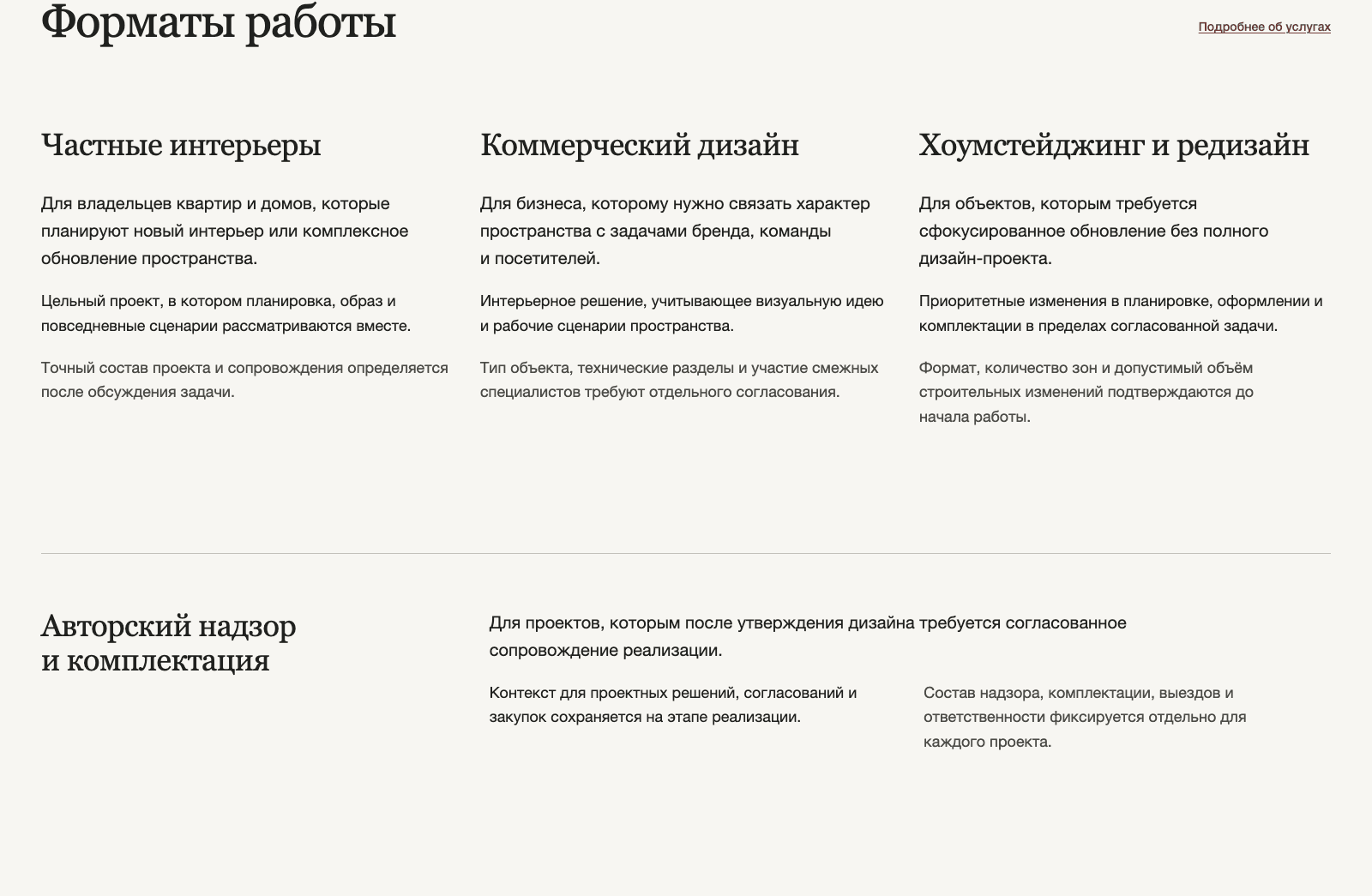
A dedicated projects page was planned to hold the studio's full portfolio with individual entries, each carrying its real location, year, and size. Services were wireframed around the studio's actual engagement models, private interiors, commercial design, and redesign or home-staging work, plus author's supervision as its own offering, rather than folding all of it into one generic service list.
Branding
Branding
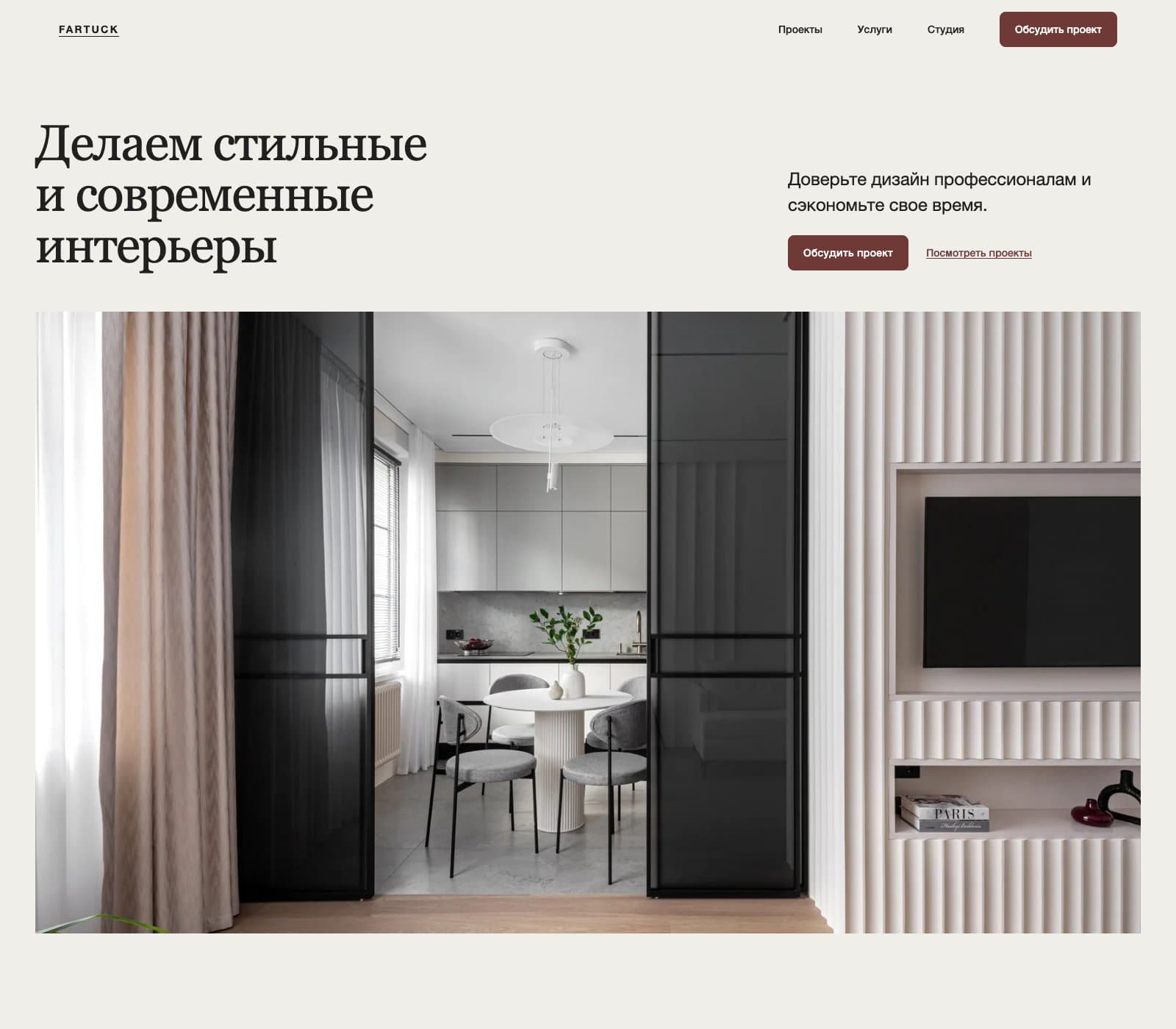
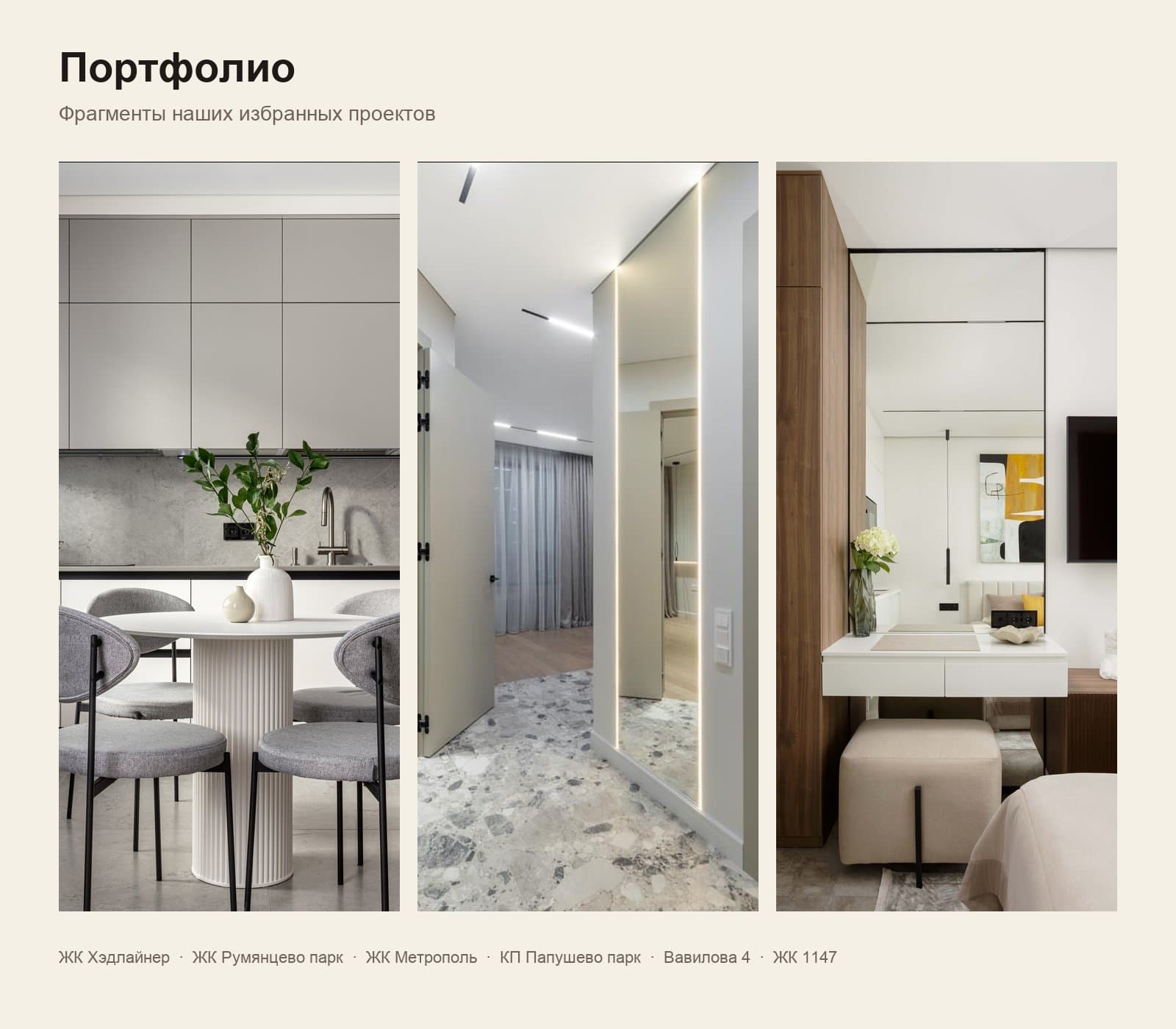
The visual identity moves toward a warmer, more editorial register than the previous Tilda template: a confident serif for headlines, generous whitespace, and a muted, paper-like background that lets the studio's own interior photography carry the visual weight instead of competing with it.
The studio's real project photography, kitchens, hallways, and bedrooms from actual completed work, replaced the previous site's heavy reliance on a single moody cover image repeated across multiple sections of the page as a decorative backdrop.
Development
Development
The site was rebuilt off Tilda entirely, removing the platform's template constraints and giving Fartuck dedicated, indexable pages for its projects, services, and studio story instead of one long anchor-linked scroll.
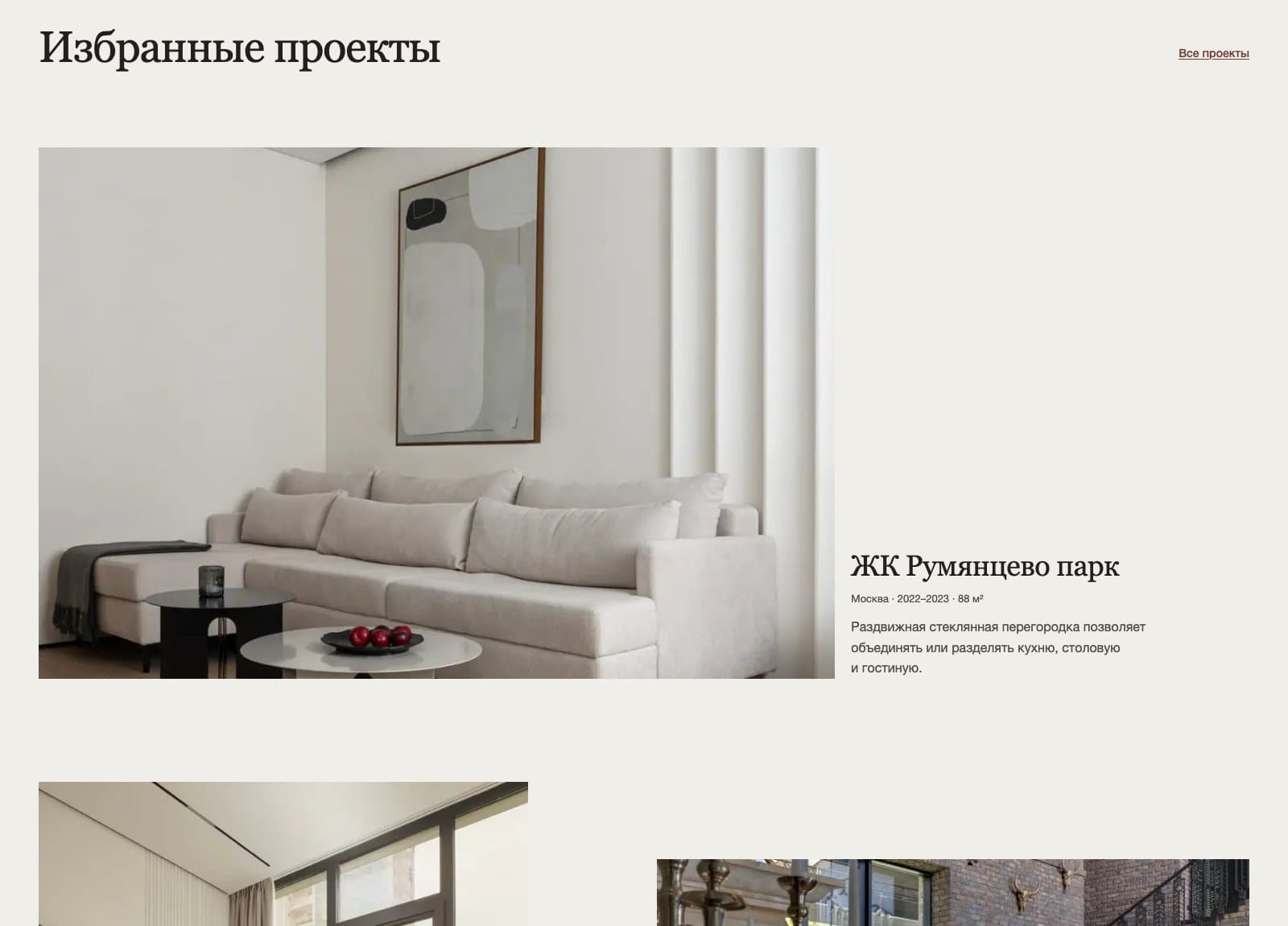
A real enquiry path now sits behind every call to action, replacing the five dead '#contacts' links from the previous site. The studio's six real projects were rebuilt as individual entries carrying their actual location, year, and size, so each can be found and shared on its own instead of disappearing into a thumbnail grid.
Results
Results
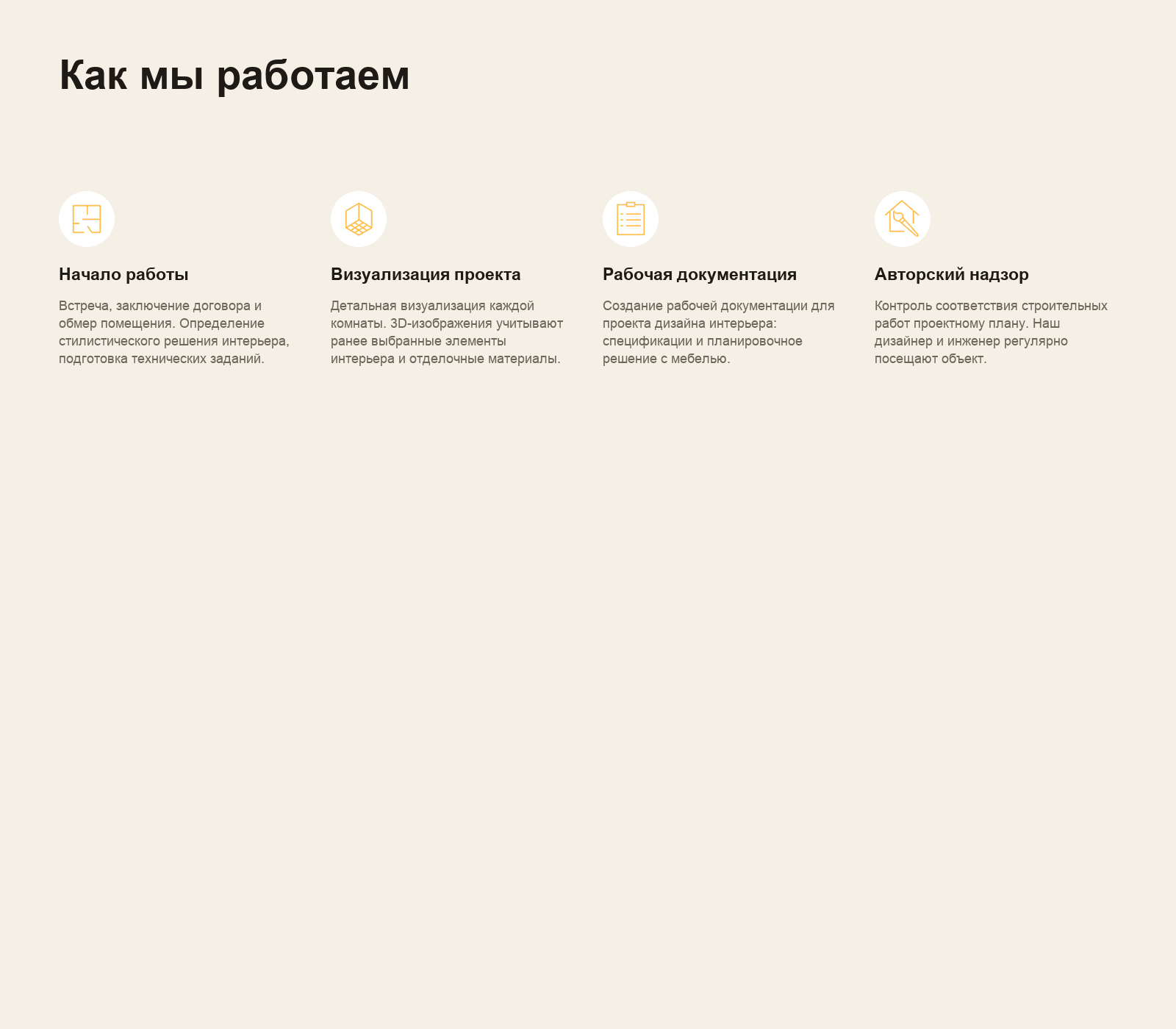
Every call to action on the site now leads somewhere real. What were five identical dead-end buttons scrolling to the same footer anchor are now a working path to actually starting a project, closing the exact gap that was costing the studio ready leads.
The studio's six real projects, and the decade of work they represent, finally have the space and individual pages that a decision of this size deserves, on a site structured around dedicated destinations for projects, services, and the studio itself instead of a single long scroll.
FAQ
FAQ
All five 'Заказать проект' buttons on the homepage linked to the same anchor at the bottom of the page rather than a form, a phone number, or an email address. There was no way to actually start a project from the site itself.
The studio already had six real projects with genuine locations, years, and sizes; the problem was that none of that detail was visible. Individual pages let each project tell its own story instead of disappearing into a grid of thumbnails.
Yes. A single-page Tilda site can't support dedicated, indexable pages for projects, services, and the studio, which meant none of them could be found directly through search or shared as their own link.
Private interiors, commercial design, and redesign or home-staging work are now presented as their own distinct formats, alongside author's supervision as a dedicated offering, rather than folded into one generic services section.
Have a project like this in mind?
Tell us about your project and timeline. We reply within one business day.